Qorvynt
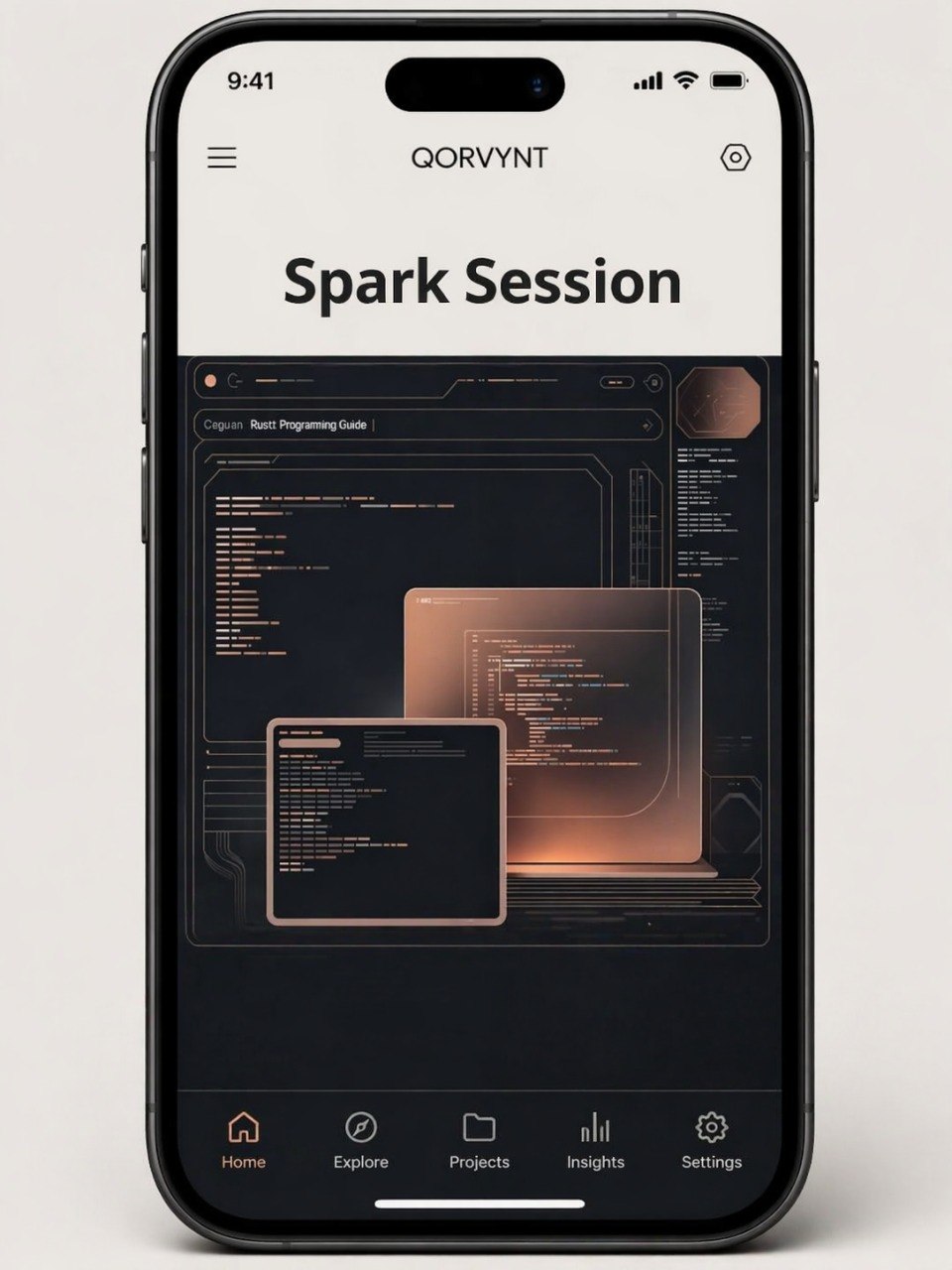
Spark Session
Spark Session
Couldn't load pickup availability
Share
- 💾 Instant digital download
- 🏛️ Lifetime access
- 🛡️ Protected checkout
- 📆 Updated for 2026
Self-paced learning overview
Problem Statement
As learners spend more time with Rust, a new challenge often appears: the need to understand not only how code is written, but how it behaves under different conditions and how it can stay understandable as it grows. Writing a few functions is one step. Building a structured program with meaningful data types, result handling, reusable modules, and testing habits is another. Many learners pause here because the language starts to demand stronger organization.
Another difficulty is that many course paths either stay too introductory or jump too suddenly into large-scale topics. This leaves learners in the middle, with partial knowledge but no clear bridge forward. If you are struggling to connect Rust syntax, ownership, modules, result handling, and practical program structure into one study path, you are not alone.
Solution
This course offers a structured mid-stage Rust pathway. It teaches the learner how to work with broader program organization, result-aware code, reusable structures, and testing-oriented thinking through detailed lessons and guided examples. The aim is to support learners who are ready for more depth without losing clarity.
What’s Inside
Module 1: Code Structure Beyond the Basics – This module expands on the foundations of program arrangement. Learners study how to break a program into smaller units, how to separate responsibilities, and how to keep code readable as examples become more detailed.
Module 2: Ownership, Borrowing, and References in Practice – Ownership is revisited with more realistic examples. Learners work with references, function parameters, and program flow in a way that reinforces why Rust handles memory through these language patterns.
Module 3: Results, Options, and Thoughtful Outcome Handling – Rust places strong attention on explicit outcomes. In this module, learners study Result, Option, and related handling patterns. They examine how code can represent different states clearly and avoid hidden assumptions.
Module 4: Structs, Enums, Traits Introduction, and Reusable Logic – This section brings together data modeling and the early use of reusable behavior patterns. Learners are introduced to the idea of traits in a beginner-friendly way while continuing to work with structs, enums, and methods.
Module 5: Testing Foundations and Code Review Habits – Learners explore why testing matters, how basic tests are written, and how reviewing code helps improve understanding. This module encourages a thoughtful study rhythm rather than only writing new lines of code.
Module 6: Guided Rust Projects – The course closes with projects that combine ownership, data modeling, result-aware flow, modular structure, and test-focused habits. The projects stay structured and instructional while showing how multiple concepts work together.
Who Is This For?
A good fit if you...
- want a wider Rust study path after the beginner stage
- are ready to work with result-aware patterns and testing foundations
- want an introduction to reusable logic patterns such as traits
- like structured examples that combine several Rust topics
- want to build a more stable coding routine
Not the right fit if you...
- are just starting Rust and need only first-contact materials
- already work comfortably with lifetimes, async systems, and large architectures
- want only project showcases without detailed teaching steps
What You’ll Learn
- how to structure Rust code with clearer separation of concerns
- how ownership and references work in more practical examples
- how to use
ResultandOptionin a thoughtful way - how structs, enums, and introductory traits support reusable code
- how testing foundations fit into Rust learning
- how to review and refine your own code more carefully
- how to combine multiple concepts inside guided projects
- how to continue into deeper Rust study with stronger preparation
Spark Session is meant for learners who are serious about developing a broader understanding of Rust while keeping the learning process organized. It adds depth without turning into a scattered collection of technical fragments. Instead, it arranges the material so that each lesson supports the next one.
The introduction to result-aware programming is especially meaningful. Many learners coming from other languages are used to lighter handling of unexpected states. Rust encourages a more explicit approach. Once learners begin to understand Option and Result not as obstacles but as expressive tools, their relationship with the language often becomes clearer.
The course also begins to introduce reusable logic patterns through early trait concepts. This is handled carefully, with explanation and examples rather than overly abstract treatment. The goal is to help learners see how Rust supports organized behavior across different types and structures.
Testing is another important inclusion. At this stage, learning to think about code behavior, checking assumptions, and reviewing outcomes becomes part of the overall development process. This does not need to be complicated to be useful. Even a basic testing habit can improve clarity and structure in a meaningful way.
Spark Session works well for learners who want to grow steadily rather than rush through topics. It supports a more complete and thoughtful Rust learning pathway while keeping the material readable and structured. For learners ready to move beyond the middle stage with care and direction, this course provides a solid step.
What is the difference between the plans?
What is the difference between the plans?
Each plan includes a different scope of Rust learning materials. The earlier plans focus on core concepts, syntax, and structured practice. The later plans include a wider range of lessons, deeper technical topics, more detailed modules, and larger project-based materials. The plans are arranged in ascending order, so each next option covers a broader learning path.
Are these courses suitable for beginners?
Are these courses suitable for beginners?
Yes. Several plans are written with beginners in mind and start from the foundations of Rust, including syntax, variables, functions, data types, and simple program structure. As the plans grow, the materials move into deeper topics such as ownership, traits, lifetimes, concurrency, tooling, and project organization.
How is the learning material organized?
How is the learning material organized?
The courses are arranged in structured modules. Each module focuses on a specific topic and includes explanations, examples, guided practice, and materials that help learners move through Rust in a clear order. This structure is meant to keep the learning process organized and easier to follow.